
Category: Uncategorized
-
Yahweh-Rapha: The Lord Who Heals

Yahweh-Rapha is first found in Exodus 15:26 and follows one of the first miracles God performs in the wilderness. In Hebrew, rapha means to restore, heal, or make healthy. Yahweh-Rapha demonstrates God’s ability to heal our bodies, our individual distress, and our collective hurts as a people or nation. To read more about God’s healing…
-
Yahweh-Jireh: The Lord Will Provide

Though this name for God only appears once in the Bible, it is of immeasurable importance. Abraham did not call the mountain “The Lord Provided”, but instead called it “The Lord Will Provide”. We need only look at the character of God, shown to us through His names, to see the magnitude of His provision:…
-
Happy Thanksgiving!
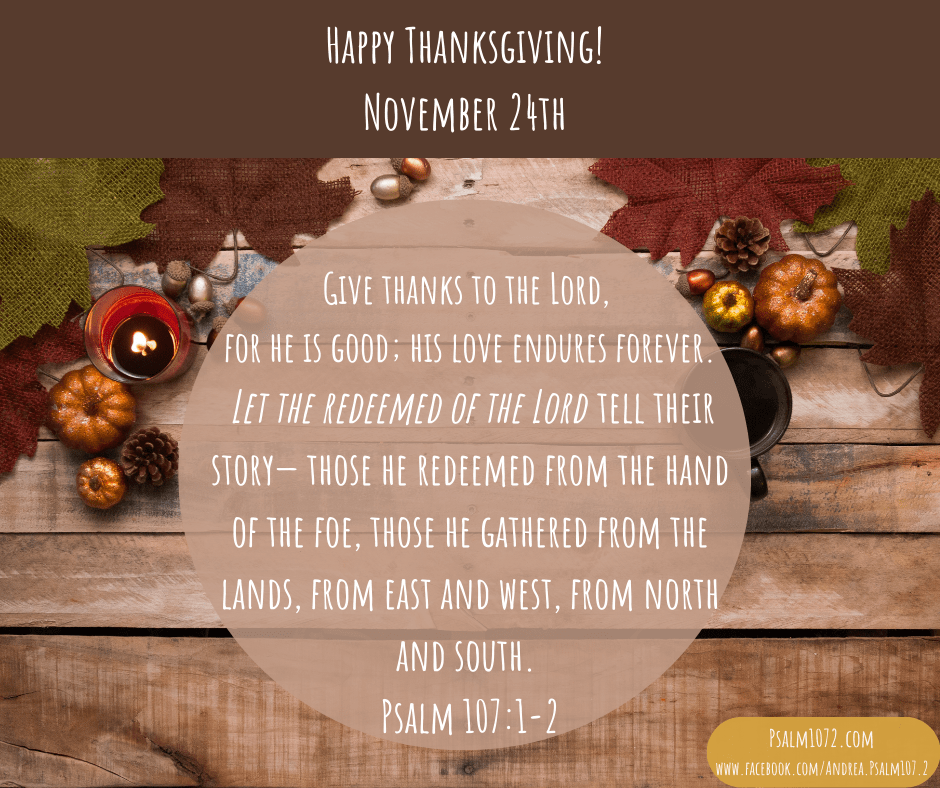
Let the redeemed of the Lord proclaim, “Thank you Lord for Your many blessings!” Father God, may Your Sons and Daughters finish out the year as a people filled with thanksgiving. May Your redeemed be a people who focus mightily on Your healing love and grace-filled gifts in all times. God, You are good all…
-
Yahweh-M’kaddesh: The Lord Who Sanctifies
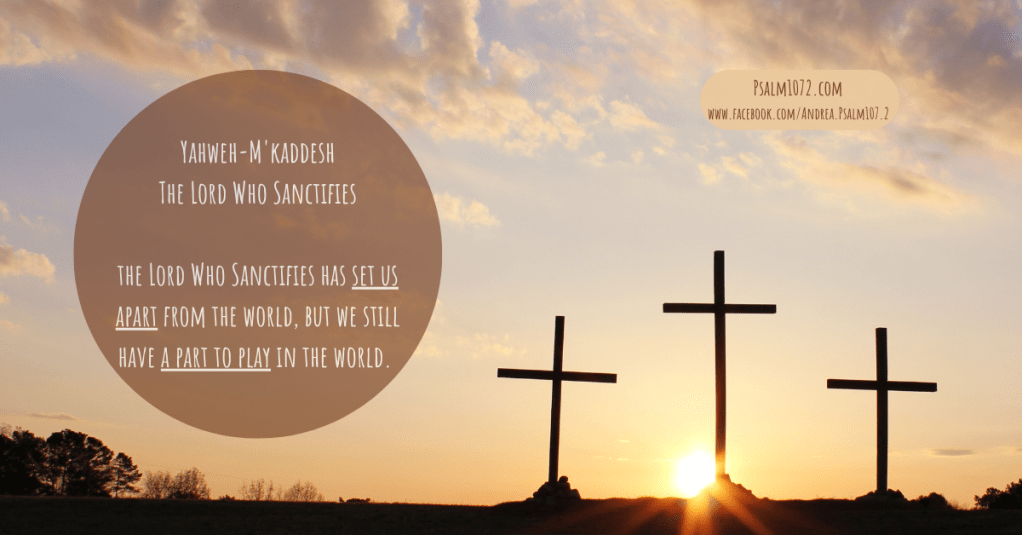
Yahweh-M’kaddesh means the Lord Who Sanctifies or Makes Holy. With this name, God shows us that He wants His people to be holy and that He alone is the One who can sanctify His people. Sweet friend, in the Old Testament sanctification involved being physically set apart. In the New Testament, we see a change…
-
Yahweh Sabaoth: The Lord of Hosts

Yahweh-Sabaoth means “The Lord of Hosts” with hosts including both angels and men. First used in 1 Samuel 1:3, it is used over 285 times in the Bible. What does this mean for us? (Click to read on!)
-
Yahweh Shalom: The Lord is Peace

Yahweh Shalom, pronounced [yah-way-shah-lohm], known also as Jehovah Shalom, is another of God’s names given while building an altar. Throughout the Bible the word shalom appears 237 times meaning “completeness, soundness, welfare, peace”. Sweet friends, those who trust in the Lord have peace because the Lord is peace. In our everlasting God we…(click to read…
-
Yahweh Nissi: The Lord is Our Banner
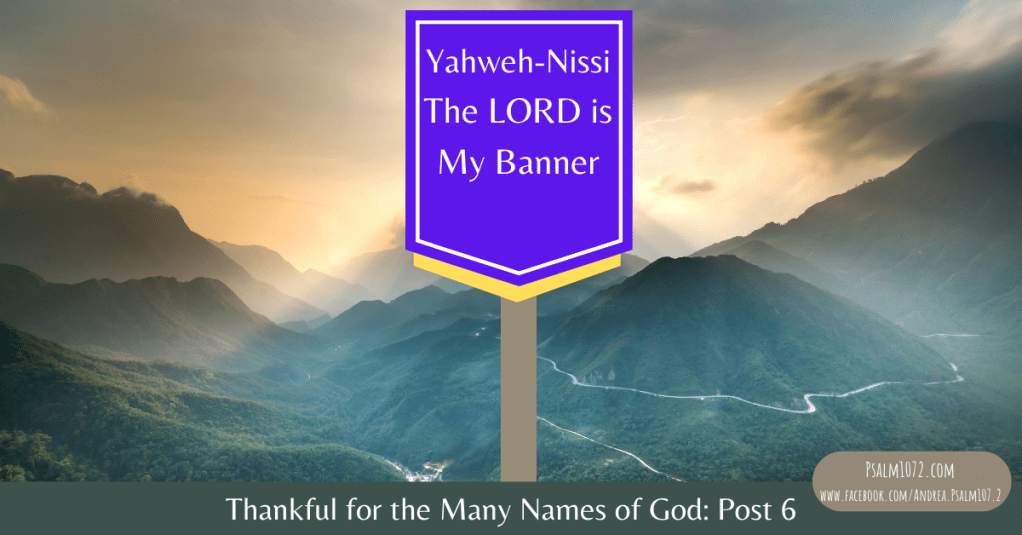
Yahweh-Nissi, also known as Jehovah-Nissi is only used once in the Bible. Proclaimed by Moses after a victory over the Amalekites, Yahweh-Nissi expressed that God was with the Israelites’ during the battle and was their banner. You see, during the battle, so long as Moses kept his hands and staff raised to God, the Israelites…
-
El Olam: The Everlasting God

El Olam, pronounced [el-oh-lahm], derives from the Hebrew root ‘lm meaning “eternity”1. The name Olam expresses completely that God is everlasting, beyond the constraints of time2. He goes behind us and before us and beside us, always making a way! (Click to read more!)
-
El Elyon: The Most High God

El Elyon, pronounced [el-el-yohn], comes from the Hebrew root meaning “to ascend”1. Used 28 times in the Old Testament, El Elyon first appears in Genesis 14:18 and is used as both an adjective to describe God as the most exalted God and also as a noun to show that God has absolute sovereignty over all…
-
El Shaddai: All-Sufficient One
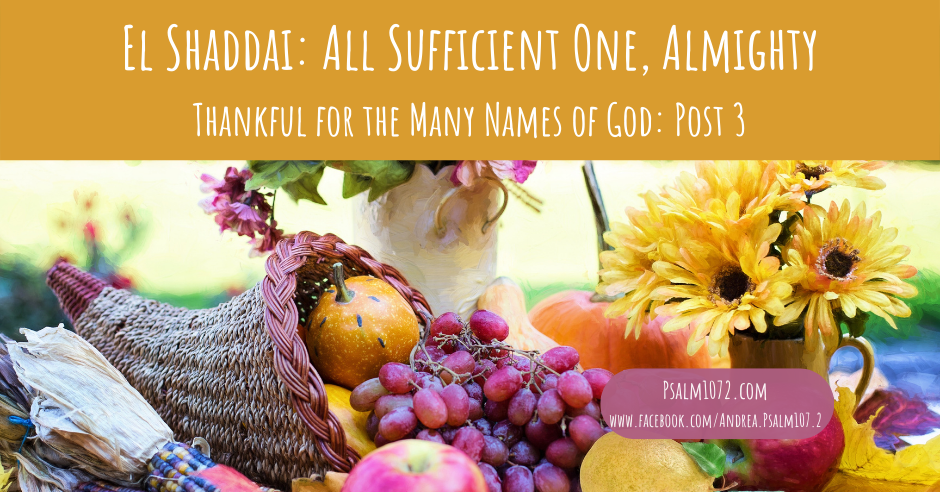
El Shaddai, pronounced [el-shah-dahy], is a compound word showing God’s character. El is translated as “God” and Shaddai is “Almighty”1. El Shaddai is also thought to be rooted in the Hebrew word shad meaning “breast” and refers to God as caring for His people as a mother would for her child, providing nourishment for His…
 The Fruitful Educator